
“Tsarabon” –
Ecological Grass Charcoal Recipe



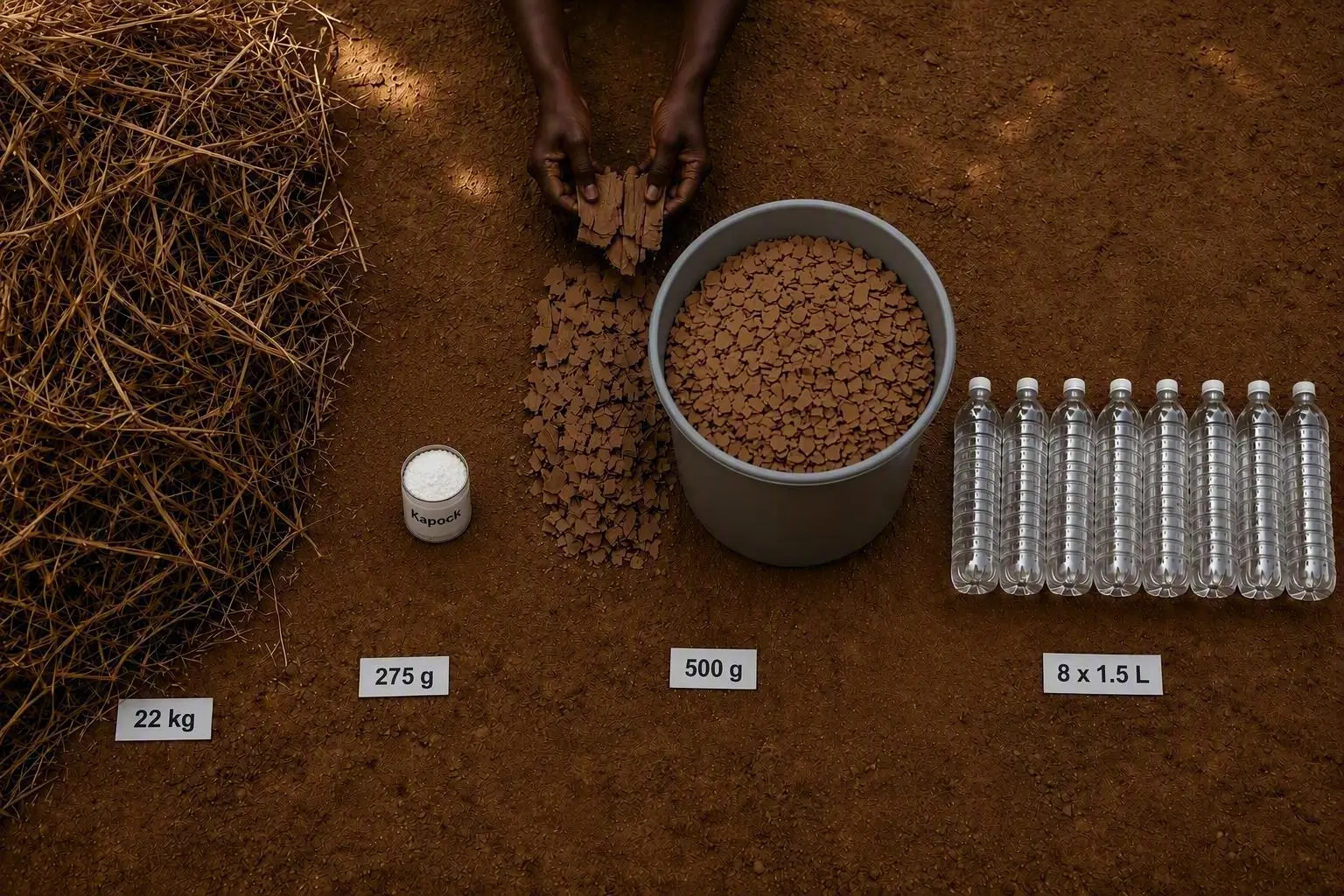
Equipment:
- Metal (200 L) drum/barrel for burning
- Pitchfork or shovel
- Matches
- Mortar and pestle (laona sy fanoto/mortier et un pilon)
- Large cooking pot (must hold at least 14 L or more)
Ingredients
-
Dry grass to burn into 5,5 kg of char
- 5,5 kg of char is a 200 L drum filled halfway, before crushing or mixing
-
12 L of water
- 8 bottles at 1,5 L each
-
Cardboard, 1 x 10 L full bucket (500g)
- not smooth or shiny, ripped into small pieces
-
1 kapok of rice flour (275g)
- It can be any other starchy flour, maize/wheat. For this use it does not have to be food quality. It can be spoiled to some degree / animal feed quality.
Preparation Steps
1. Grass Char Making & Grinding
- Gradually burn the grass inside the metal drum angled at 30-45° using the oxygen curtain method to prevent it from turning into ash.
The oxygen curtain method:
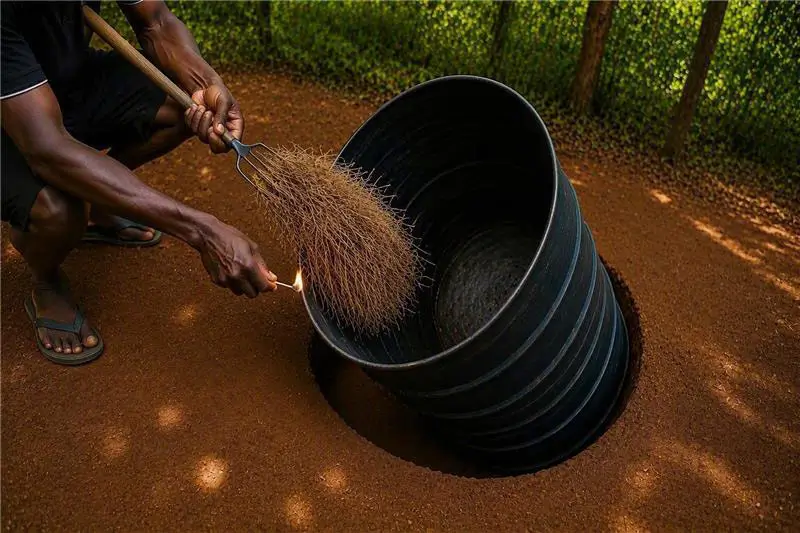
- 1) Add the first handful of dry grass to the bottom of the drum and light it.
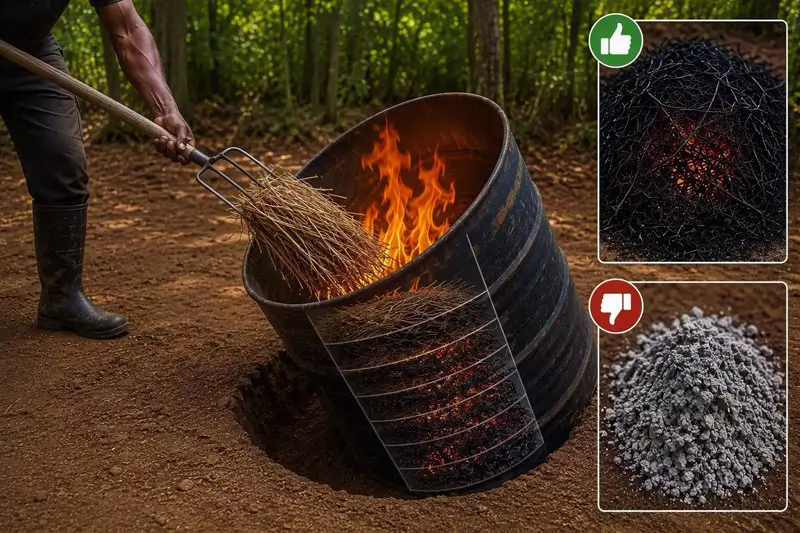
- 2) As soon as the color of the grass has turned all black, add the next batch of, again only a handful, grass on top of that- before the fire goes out. That way the second batch of grass will catch fire and consume the oxygen before it can reach the first/original batch of now black grass at the bottom of the barrel because oxygen can only enter the barrel from the top.
- 3) As soon as the second batch of grass has turned all black, add the 3rd batch of grass on top.
- 4) Keep repeating these steps until the barrel is about half full with burned (black) grass/char.
- 5) Sometimes a freshly added batch does not turn black uniformly, in that case, with the pitchfork, only lift up the last added batch a little off the pile, or even turn it upside down. This allows the dry grass that has not caught fire to catch.
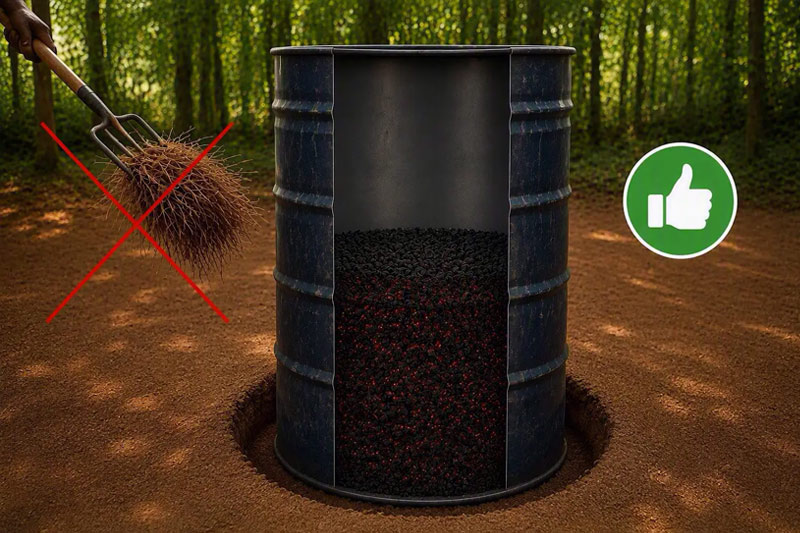
- 6) To stop the burning process (when the barrel is about half full with char) you must follow with the next step immediately, if you pause without the next step all burned material will turn into ashes and will become useless for further processing.
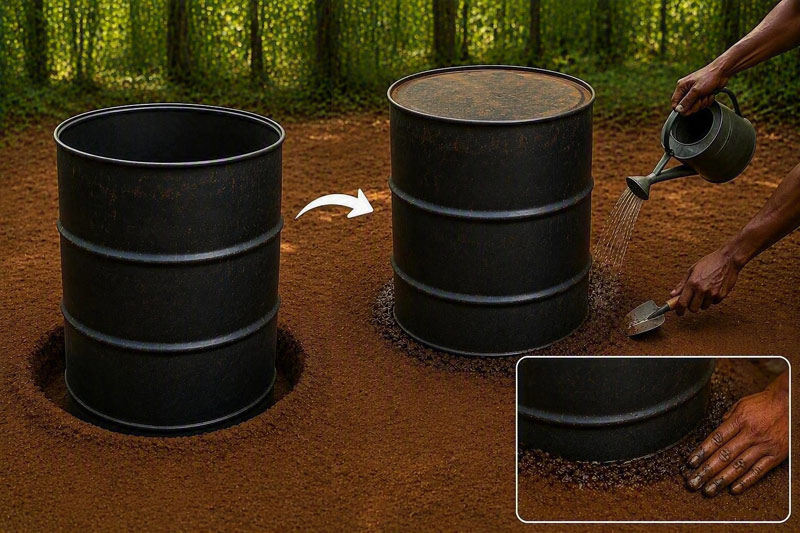
- Once the grass is turned into char, seal the drum tightly and flip it upside down onto the ground, covering the seal with wet dirt to cut off the air supply and smother the fire (pyrolysis without oxygen).
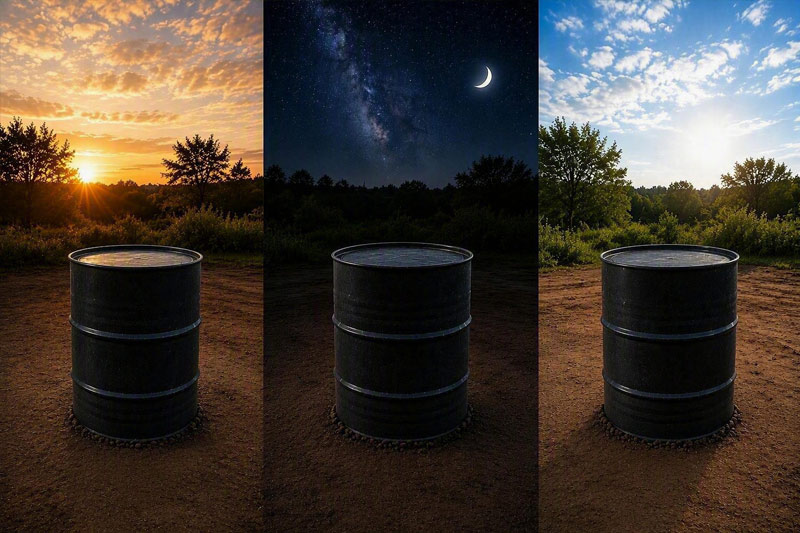
- Let it cool for 12 hours.
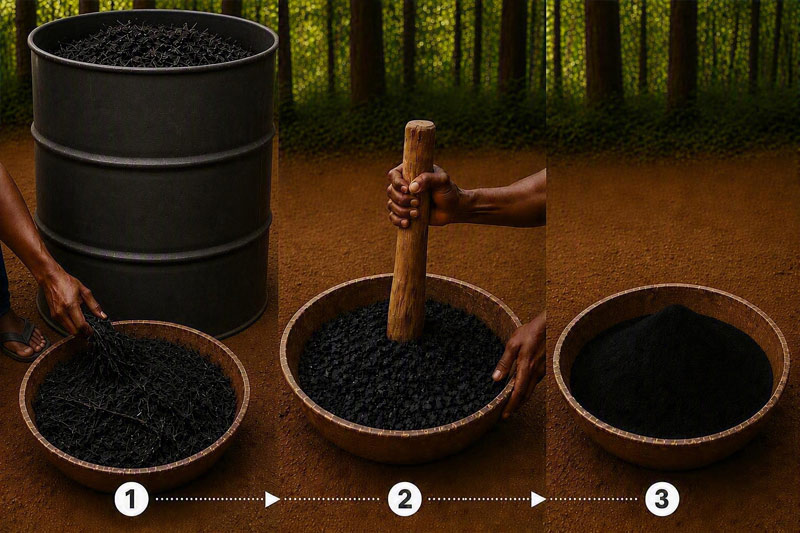
- Collect the resulting char and crush it gently yet firmly into a fine powder. After crushing, the volume in the barrel will be much less than half full.
2. Preparing the Glue
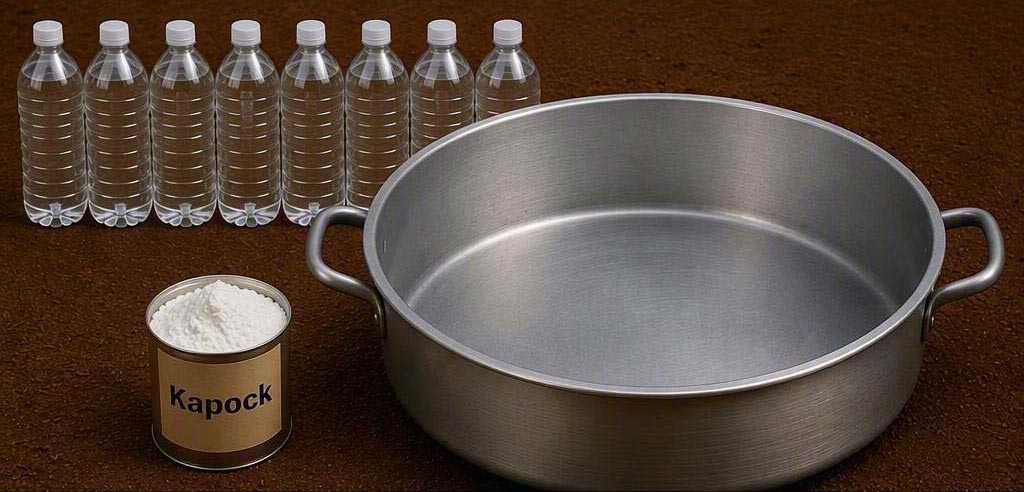
Starch
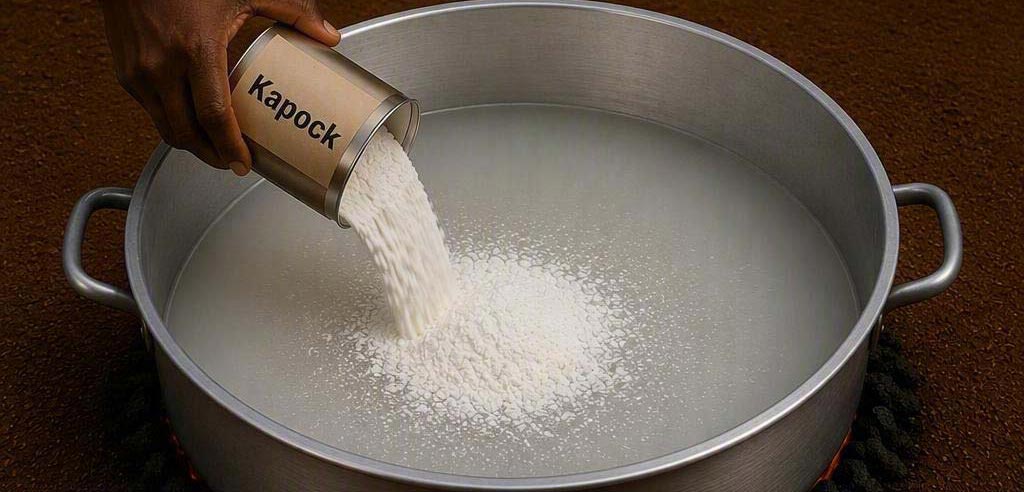
- Mix the rice flour (or starch) with 12 L of water.
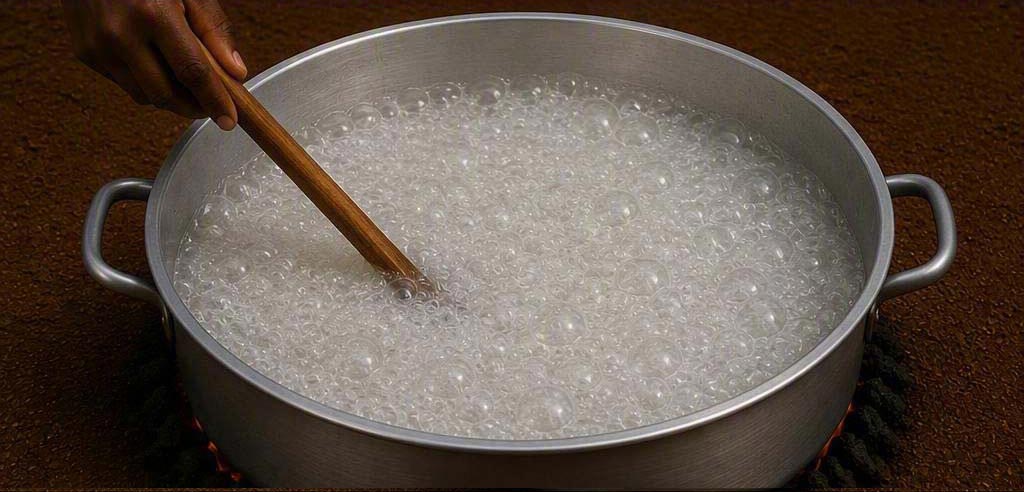
- Bring the mixture to a boil for 1 minute while stirring constantly to form a sticky liquid.
3. Cardboard
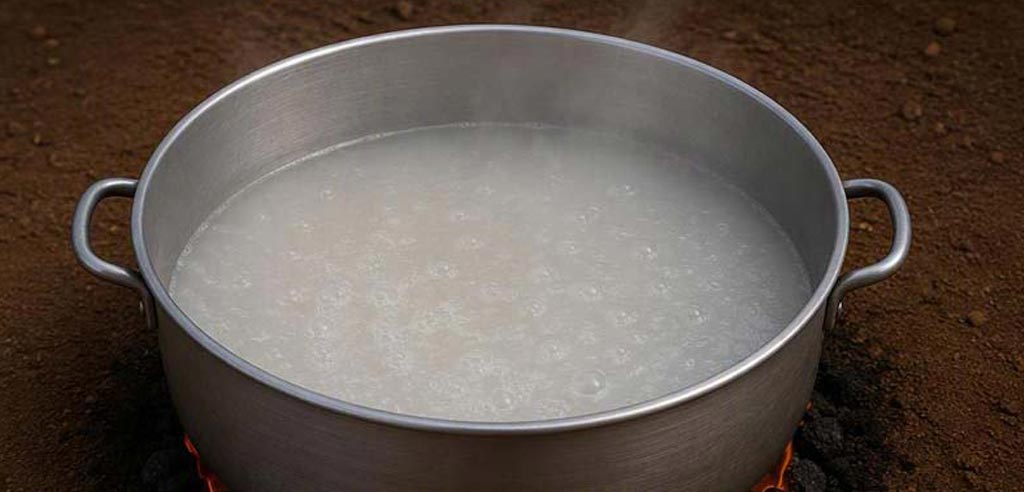
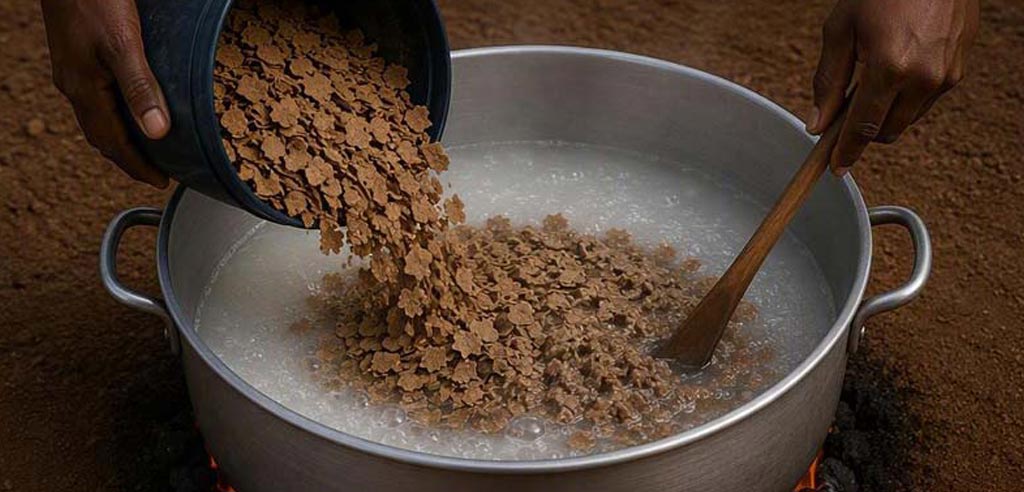
- Tear the cardboard into smallest pieces possible.
- Add the cardboard bits into the warm/hot water/starch mix. Mix/grind until a paste is formed and there are no large chunks of cardboard.
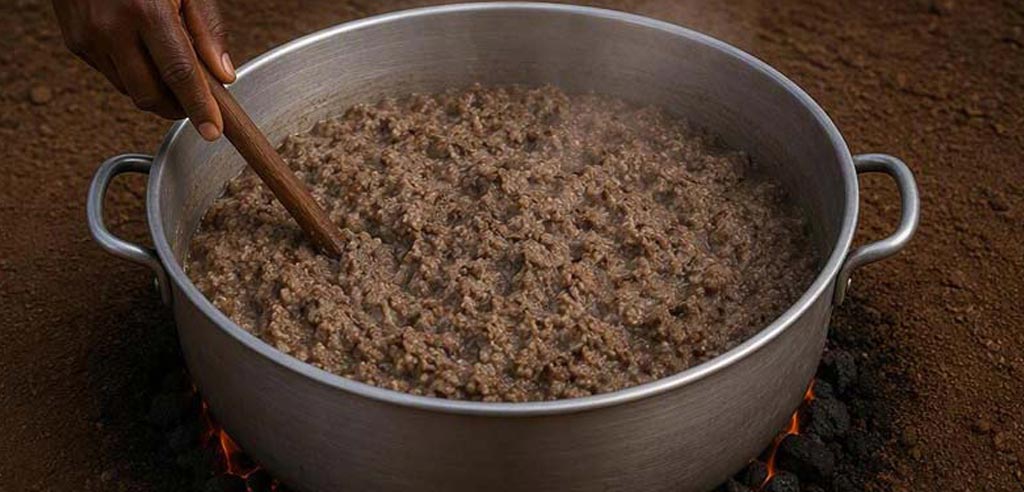
- It will be easier to mix/grind the cardboard and water mixture into a paste if you let it sit for 6 hours or overnight first.
4. Mixing
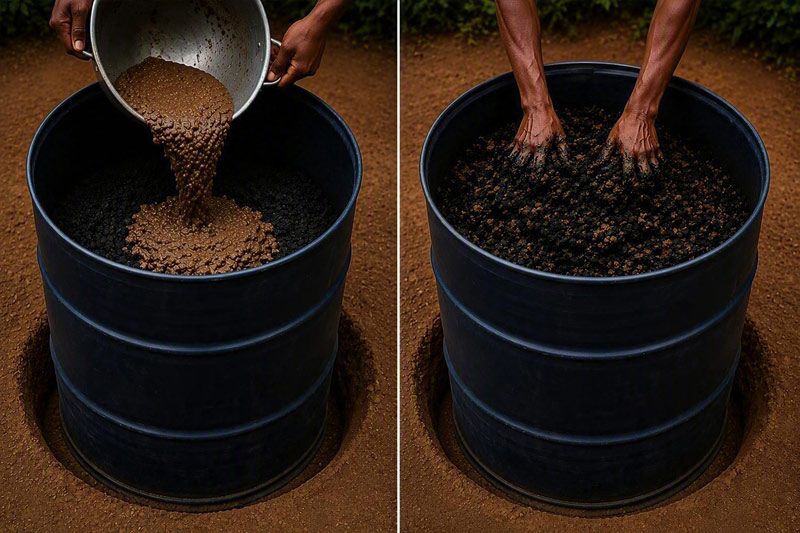
- After the char has cooled down and been crushed, mix the 12 L cardboard/water/starch into it
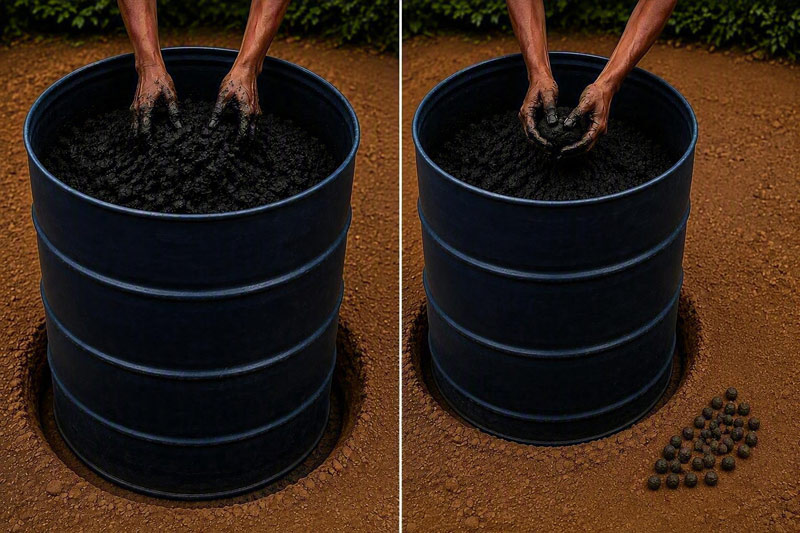
- Knead until you get a uniform mixture.
5. Shaping
- Take handfuls of the mixture and form firm balls by hand (or use a mold/press if available), squeezing tightly to remove air pockets and excess water.
6. Drying
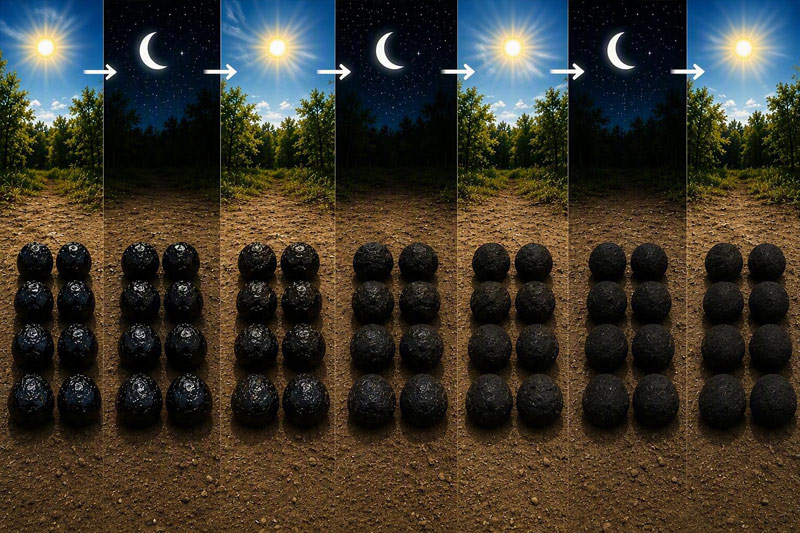
- Spread the formed balls out on a dry surface.
- Leave to dry in direct sunlight for several days until they are completely hard and moisture-free.
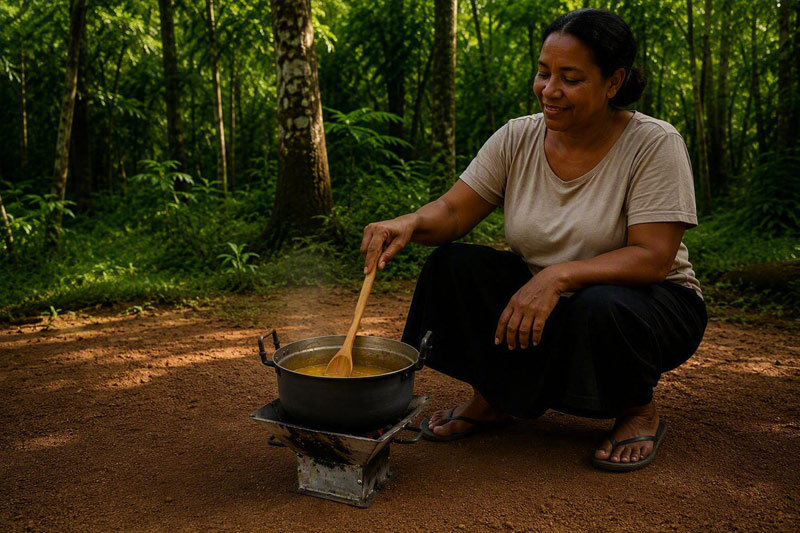
7. Use like typical charcoal.
Useful notes/Observations:
Oxygen Curtain
Carbonizing grass into char follows the same principle as carbonizing wood into charcoal. The biggest difference is the timeframe. This is best observed on an open fire. If you add a log of wood into an open fire, it will turn from wood (brown) into charcoal (all black) into ashes (white) within 20-30 minutes. If you add dry grass into an open fire, it will turn from brown to black within 3 minutes. Then from black char into white ashes within the next 3 minutes. In both cases, the availability of oxygen controls the process.
In any of these situations, if you stop the supply of oxygen, the process will stop. In the barrel, we manage the amount of oxygen available to the partially burned grass (char) by continuing to add burnable material on top of it. The freshly added dry grass catches fire and the flame uses all the oxygen so that it cannot pass by the flames to the bottom of the pile. Hence, we are creating a ‘curtain’ that the oxygen cannot pass.
Grass, branches and logs of wood
As established in the above comparison of “log of wood” and “dry grass”, we observe that the timeframe of burning is relative to the density of the material. If the material burning has large variations in density, the various materials will take a shorter or longer time to go through the stages.
This means that if you are burning grass and small tree branches at the same time, the tree branches will take longer to turn all black than the grass. By the time the branches have properly blackened, the grass will have turned into ashes already.
More ashes present in the final Tsarabon mix will the lower the quality of the final product.
The Barrel
The best barrel to use is one that has a sealable top (these come with a snap ring). With these it is easier to stop the burning process by sealing the barrel airtight.
The barrel should not have any other holes in it, otherwise oxygen will enter uncontrolled and the material will continue to burn and turn into ashes.
If no barrel is available, a similar shaped hole in the ground could be used. Attention must be paid when sealing it airtight after the burn process has stopped.
The Glue
If the final mix does not stick properly, after following the recipe, you might have to add more starch, or use a better quality starch.
Traditionally, clay has been known to be used as glue instead of starch. That is an option but will significantly degrade the quality and burn characteristics of the Tsarabon balls.
The Cardboard
The cardboard has two functions.
1) It acts as glue (not as good as the starch, but still helpful).
If you leave out the cardboard, you must increase the quantity of starch.
2) It helps control the density of the Tsarabon balls. If you add cardboard, the Tsarabon balls become lighter. The current recipe should give Tsarabon a similar weight/volume to traditional charcoal.
Pressure
When forming the Tsarabon balls, pressure applied by hand is sufficient. Higher pressure does not add to the final quality of the product. On the contrary, higher pressure presses out more liquid out of the mix. Since the liquid also contains the “glue”, the final product becomes more brittle and does not keep it’s shape as well.
The Shape
The shape of a ball is the best for durability, specifically during road transport.
Humidity
Carbon has very “thirsty pores”. It will absorb humidity quickly so it is always best stored as dry as possible.
Isn’t burning grass releasing carbon into the atmosphere?
Absolutely!
Tsarabon is crude attempt to fix a much more threatening situation, specifically in Madagascar. Madagascar currently has only about 10% of the original forest left. Where trees have been harvested, grass landscapes take over. These areas (up to 20-25% of the entire island surface area) are burned down every single year. As this grass burns down, the trees that try to regenerate through the remaining root systems are falling victim to the fire every year.
By harvesting the grass and turning it into Tsarabon, these rural areas are being protected from wildfires. At the same time, an income is being created, the supply chain for charcoal in the cities is satisfied, and trees get a chance to regenerate. In the meantime, gas, solar and electric energy get a chance to catch up with the growing demand.

